
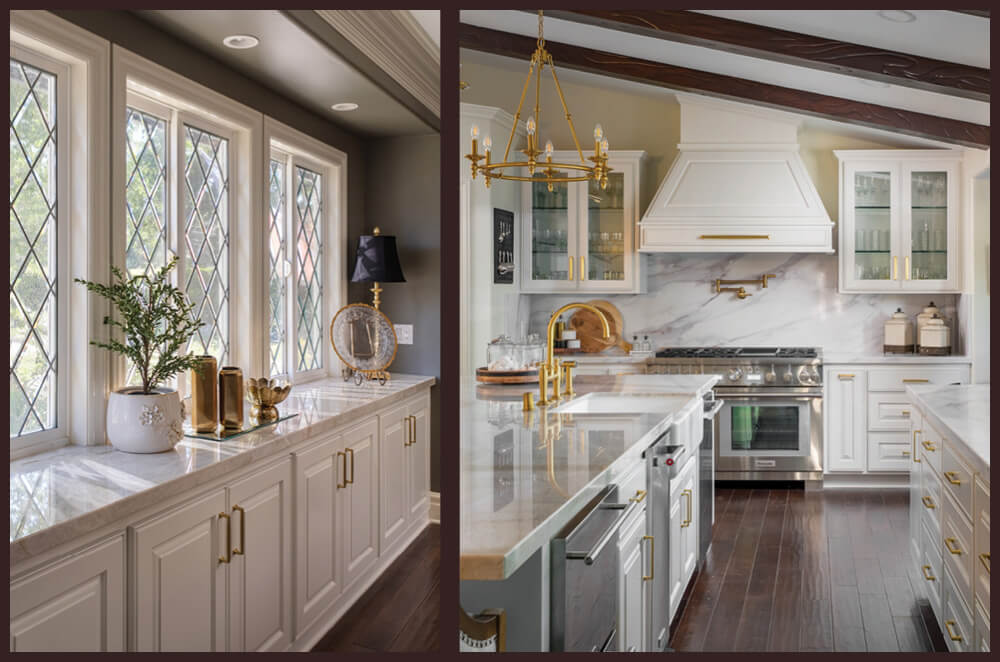
The kitchen and dining room serve different purposes, but when they are thoughtfully designed together, the two spaces can feel like a natural extension of one another. The goal is not to make them identical. It is to establish enough visual connection that moving from one room to the next feels effortless.
Here are several ways to create a cohesive look while allowing each space to retain its own character.
Establish a Consistent Color Palette
Begin with a shared foundation of two or three primary colors. Cabinetry, countertops, walls and flooring do not need to match exactly, but their tones should complement one another. Repeating white cabinetry in both rooms, for example, can create continuity, while wood furnishings, upholstery and decorative accents give the dining room its own personality.
Repeat Key Materials
Using the same countertop material in both spaces is one of the most effective ways to tie them together. A beautiful natural stone or quartzite surface can appear on the kitchen island and then be repeated on a dining room built-in, serving area or display nook. The repetition feels intentional and helps separate features read as part of one overall design.
Coordinate Hardware and Finishes
Cabinet hardware, faucets, lighting and shelving brackets offer another opportunity to create connection. Choosing finishes from the same family, such as satin bronze, polished nickel or matte black, brings consistency without requiring every fixture to be an exact match. A finish used on kitchen pendants might reappear on dining room sconces, cabinet pulls or floating-shelf supports.
Let Cabinetry Create a Visual Bridge
Built-in cabinetry can extend the style and function of the kitchen into the dining room. Coordinating door styles and finishes make the rooms feel related, while glass doors, open shelving or specialized storage help distinguish the dining area. Dining room cabinetry can also provide a practical home for serving pieces, linens, glassware and other items that might otherwise take up valuable kitchen storage.
Layer the Lighting
Lighting should complement both the design and the purpose of each room. The kitchen requires bright, functional illumination for cooking and preparation, while the dining room benefits from softer, more atmospheric lighting. Recessed lights, pendants, sconces and interior cabinet lighting can work together to create a layered plan that feels cohesive while giving each room the right ambiance.
Preserve Something Special
A successful remodel does not always mean replacing everything. Existing architectural features, such as distinctive windows, ceiling details or a meaningful furniture piece, can become focal points within the new design. The surrounding finishes should enhance those elements rather than compete with them.
Design the Spaces as a Whole
The best time to create cohesion is during the earliest planning stages. Considering the kitchen and dining room together allows cabinetry, surfaces, storage and lighting to be coordinated before construction begins. It also helps uncover opportunities to improve how the rooms function together for everyday meals, holidays and entertaining.
A thoughtful design should make adjoining spaces feel connected without sacrificing what makes each room special. With a consistent palette, repeated materials and carefully coordinated details, the kitchen and dining room can become two distinct spaces that tell one beautiful story.
The Lenton Approach
At Lenton Company, we look beyond individual rooms to consider how your home functions and flows as a whole. By coordinating layouts, materials, finishes and architectural details, we create spaces that feel beautifully connected while still reflecting your personal style, daily needs and budget.
Thinking about remodeling your kitchen, dining room or adjoining living spaces? Let’s start the conversation. Our experienced design-build team can help you explore creative solutions that bring greater beauty, function and continuity to your home. Call 661.273.9179 or visit lentoncompany.com to schedule a consultation.