
Design trends often move in more than one direction at the same time. In some homes, features associated with midcentury architecture, such as sunken living rooms, are being removed to improve safety, accessibility and flow. In others, homeowners are embracing the warm woods, clean lines, sculptural forms and playful personality that defined the era.
Is Midcentury Modern a Trend?
Yes, but it is more than a passing trend. Midcentury modern design broadly refers to the architecture, furniture and interiors that emerged from the 1940s through the 1960s. The style emphasized clean lines, functional layouts, uncluttered forms and a connection between indoor and outdoor living. Designers also experimented with new materials, bold patterns and organic shapes.
Its popularity has risen and fallen over the decades, but it has never disappeared. What changes is how the style is interpreted.
Today’s midcentury-inspired rooms are generally less literal than the carefully coordinated interiors of the past. Rather than creating a 1960s time capsule, designers are selecting a few recognizable elements and blending them with contemporary comfort and function. Warm woods, curves, abstract artwork, terrazzo and sculptural lighting are being mixed with softer colors, updated materials and modern technology.
Current design interest in curved furnishings, character-rich rooms and natural wood makes midcentury influences feel especially timely. As this design overview from Homes & Gardens suggests, the most successful rooms combine midcentury elements with other periods and personal pieces so the result feels layered rather than themed.
Why the Style Continues to Appeal
Much of midcentury design was grounded in principles that remain relevant: simplicity, practicality and beauty without unnecessary ornamentation.
Its streamlined forms work well in both large and compact spaces. Warm wood tones make a room feel inviting, while tapered profiles and raised furniture legs create a lighter visual footprint. Curved seating and globe lighting soften the clean lines, and abstract patterns add personality without overwhelming the space.
There is also a sense of optimism in the style. Midcentury interiors were often expressive, incorporating mustard, avocado, orange, turquoise and walnut. Today’s interpretation is usually more restrained, but it retains that willingness to use color, shape and pattern with confidence.
A Fresh Take on Retro Inspiration
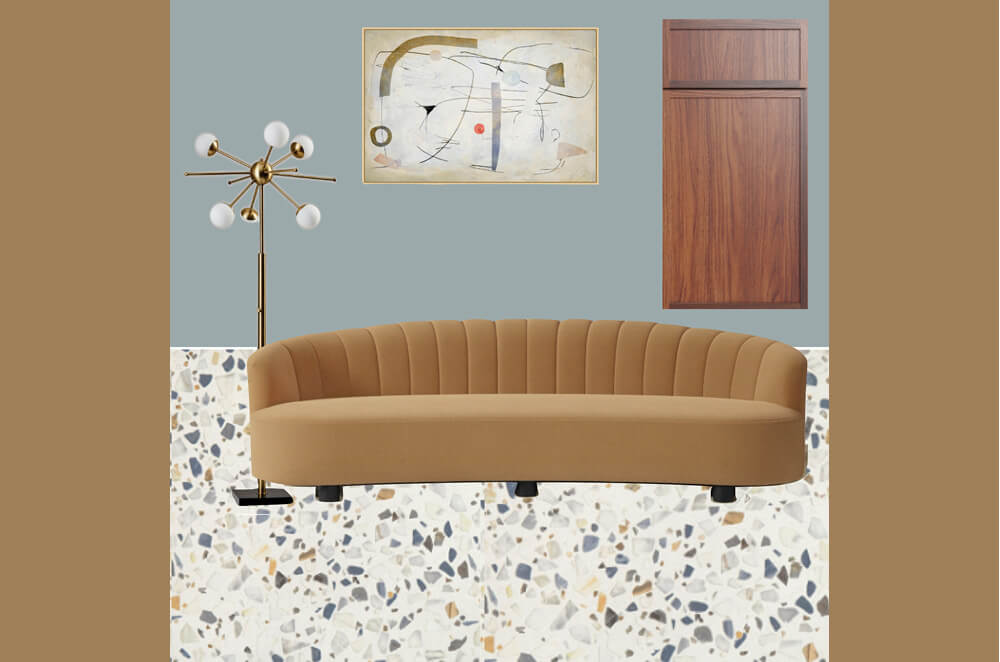
Our inspiration board shows how midcentury character can be incorporated without making a room feel dated.
KCD’s Oslo cabinetry establishes the look with a slim profile, clean lines and rich walnut coloring. The natural woodgrain adds warmth and depth while the streamlined door style keeps the cabinetry feeling current.
Underfoot, Marazzi Curation tile in Shore introduces a terrazzo-inspired pattern with the retro flair of the original material. Its scattered fragments provide movement and visual interest, while the light background keeps the room bright.
The walls are grounded in Mission Bay Blue by Dunn-Edwards, a muted blue-gray with soft green undertones. The color offers a quieter alternative to the brighter turquoise shades often associated with the era, creating a relaxed backdrop for walnut, brass and warm upholstery.
The Doppler LED Floor Lamp from West Elm adds the sculptural, space-age quality seen in many midcentury fixtures. Its branching brass arms and globe shades make it a statement piece without requiring a large footprint.
Above the sofa, Playground Abstract Canvas Wall Art brings in the freeform lines and abstract shapes that were central to the era’s art and textiles. A curved sofa completes the palette with a soft, contemporary interpretation of midcentury furniture.
Together, the elements feel nostalgic but not dated. Each carries a recognizable influence from the past, yet the overall composition is comfortable, fresh and appropriate for a modern home.
Preserve the Style, Improve the Function
A home can honor its architectural roots without being held back by them. For example, a homeowner may love the original beams, expansive windows or indoor-outdoor relationship of a midcentury home but find that a sunken room presents a falling hazard. Raising the floor does not erase the home’s identity. It allows the architecture to evolve while other design choices preserve the warmth and spirit of the style.
The same principle applies to closed kitchens, limited storage, outdated fireplaces and inefficient lighting. Thoughtful remodeling makes it possible to retain the features that give a home character while changing those that no longer support everyday life.
Designing Beyond the Trend
The best interiors are not defined by a single label. They reflect the architecture of the home, the personalities of the people living there and the way the spaces need to function.
If midcentury design speaks to you, there is no need to adopt every element. A walnut cabinet, curved sofa, terrazzo-inspired floor or sculptural light may be enough to give a room the warmth and personality you love. Choosing a few meaningful references creates a look that feels collected and personal rather than overly themed.
The Lenton Approach
At Lenton Company, we believe good design should respect what makes a home special while creating spaces that work beautifully for today. Trends can provide inspiration, but the finished home should always feel like yours.
Let’s talk about your next project.
Thinking about updating the style or function of your home? Call Lenton Company at 661.273.9179 or visit lentoncompany.com to start the conversation.